
2026-10-10 · Robert "Rob" Jenkins
Clearing Kitchen Sink Clogs from Grease in Older Englewood Homes
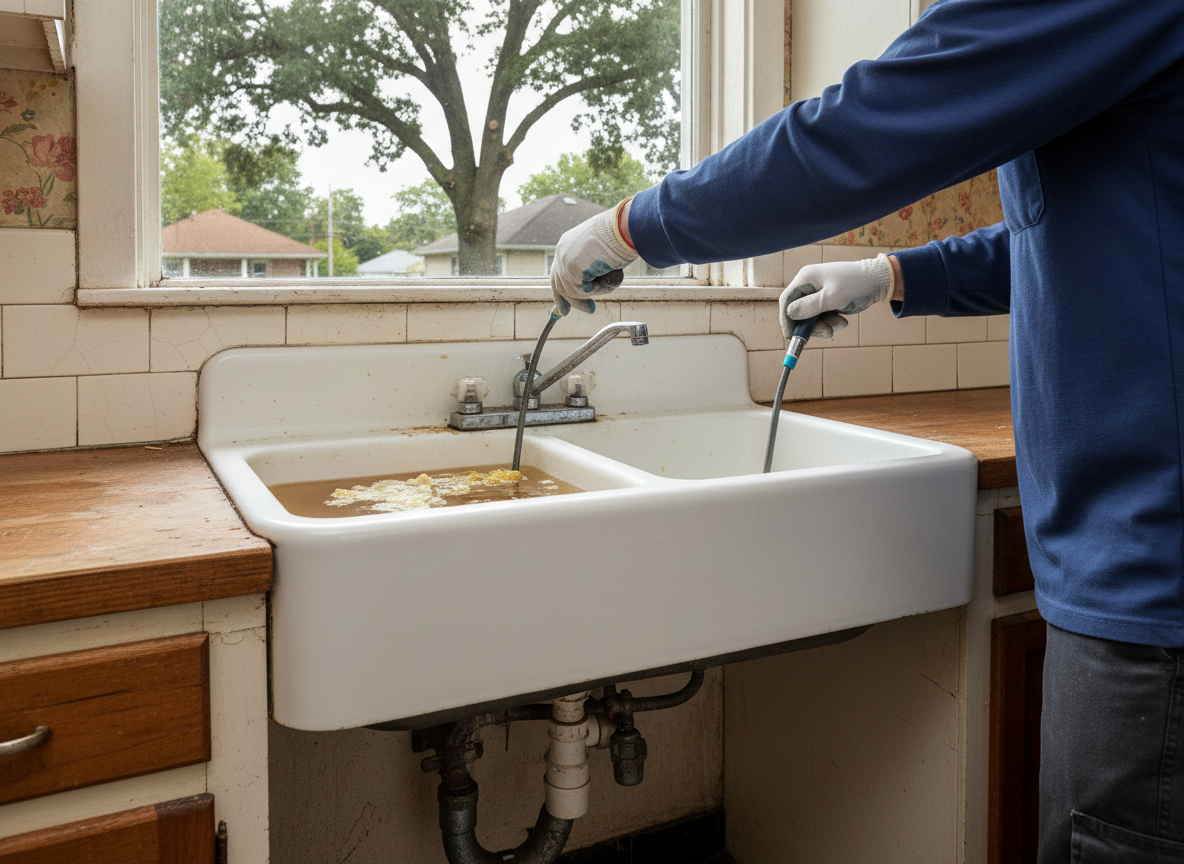
Clearing kitchen sink clogs caused by grease in older Englewood homes typically involves a combination of hot water, dish soap, and a plunger for minor blockages, or a drain snake for more stubborn issues. However, due to the age of much of the plumbing in areas like Downtown Englewood and around Cushing Park, these clogs can be particularly persistent and often require professional intervention, especially if years of buildup have significantly narrowed the pipes. The semi-arid climate of Arapahoe County, with its hot summers and cold winters, means that grease can solidify more readily in pipes during cooler months, exacerbating the problem. Addressing these clogs promptly is crucial to prevent more severe plumbing issues.
Why Grease is a Major Problem in Older Englewood Plumbing
Many homes in Englewood, particularly those built several decades ago, often feature cast iron or galvanized steel plumbing. Unlike modern PVC pipes, these older materials have rougher internal surfaces that are more prone to corrosion and accumulation. When hot cooking grease, oils, and fats (often referred to collectively as FOG) are poured down the drain, they cool and solidify as they travel through the pipes. This congealed grease sticks to the rough pipe walls, gradually building up layers. Over time, this buildup significantly reduces the pipe's diameter, eventually leading to a complete blockage. This issue is particularly prevalent in kitchen sinks, as they are the primary point for grease disposal.
The problem is compounded by our local climate. While Englewood experiences hot summers, the cold winters mean that any grease making its way into the drain lines will cool and solidify much faster, especially in uninsulated sections of pipe or those running through crawl spaces. This rapid solidification creates a hard, waxy plug that can be extremely difficult to dislodge with home remedies. Furthermore, older homes may have less direct and more circuitous drain lines, providing more surface area and opportunities for grease to accumulate. Understanding these factors is key to effective prevention and clearing.
Initial Steps for Tackling a Grease Clog
When you first notice your kitchen sink draining slowly or not at all, a grease clog is a likely culprit. Before calling in a professional, there are a few steps you can take to try and clear it yourself. The most common and often effective method for minor grease clogs is a combination of hot water and dish soap. Boil a large pot of water and carefully pour it down the drain. The hot water helps to melt the solidified grease. Immediately follow this with a generous amount of liquid dish soap – about 1/2 cup – which acts as a degreaser. Let this sit for 15–20 minutes to allow the soap to break down the grease, then flush with more hot water. Repeat this process a couple of times if necessary.
If the hot water and dish soap don't work, a plunger can often provide the necessary force. Ensure there's enough water in the sink to cover the plunger's cup, then create a tight seal and plunge vigorously for 20–30 seconds. The suction and pressure can help dislodge the clog. Remember, chemical drain cleaners, while seemingly convenient, can often do more harm than good, especially in older pipes. They can corrode pipe materials and create hazardous fumes, and are generally not recommended for grease clogs as they may only partially dissolve the blockage, leaving a sticky residue that attracts more debris. For more persistent issues, consider professional kitchen drain cleaning.
When to Call a Professional for Stubborn Clogs
While DIY methods can be effective for minor grease clogs, there are clear indicators that it's time to call an expert. If you've tried hot water, dish soap, and plunging multiple times without success, or if the clog returns quickly, it's a sign that the blockage is too severe or deep for home remedies. Another red flag is if you notice water backing up into other fixtures, such as your dishwasher or even a nearby bathroom sink. This could indicate a more widespread issue in your main drain line, potentially requiring main drain cleaning. Persistent foul odors emanating from the drain, even after attempting to clear it, also suggest a significant buildup that needs professional attention.
Professional drain cleaning services, like those offered by Englewood Drain Harbor Pros, have specialized tools and expertise to tackle even the toughest grease clogs. We use techniques such as drain snaking with commercial-grade augers that can cut through hardened grease, and in severe cases, hydro-jetting. Hydro-jetting uses high-pressure water streams to scour the inside of pipes, effectively removing years of grease buildup and restoring the pipe to its original diameter. This is particularly effective for older homes in areas like Littleton or Cherry Hills Village, where similar plumbing challenges exist. We are available Mon–Fri 8am–6pm and Sat 9am–2pm to address these urgent issues.
Preventing Future Grease Clogs in Your Englewood Home
The best way to deal with grease clogs is to prevent them from forming in the first place. This is especially important for preserving the plumbing in older homes throughout Englewood and Arapahoe County. The golden rule is simple: never pour grease, fats, or oils down your kitchen sink drain. Instead, pour cooled grease into an old container (like a coffee can or glass jar), let it solidify, and then dispose of it in the trash. Wiping greasy pans with a paper towel before washing can also significantly reduce the amount of FOG entering your pipes.